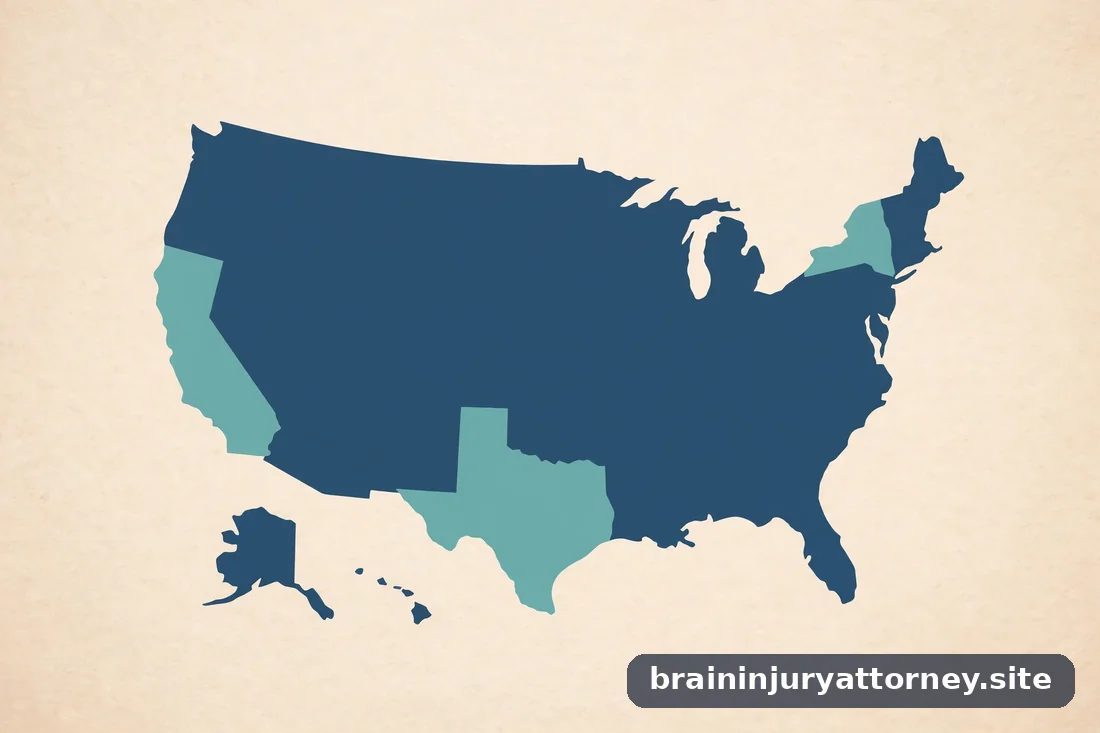
In 2026, several states rewrote the rules that govern injury claims. New York enacted a sweeping auto tort reform effective May 26, 2026 — eliminating a key serious-injury category and moving from pure to modified comparative fault. Missouri debated cutting its personal injury filing deadline, and Florida’s 2023 two-year rule is now closing windows for 2024 injuries. Because injury law is state-specific and still moving, always verify your state’s current rules with primary sources.

New York’s 2026 auto tort reform
The most consequential 2026 change reported in legal-industry coverage is New York’s motor vehicle tort reform package, effective for all actions commenced on or after May 26, 2026. New York is the nation’s second-largest auto-accident jurisdiction, so changes there ripple nationally. According to legal-industry reporting from September 2026, the package includes:
- Elimination of the 90/180-day serious-injury category. New York’s no-fault law has long required auto-accident plaintiffs to meet a “serious injury” threshold under Insurance Law 5102(d) before suing for non-economic damages. The reform removed the category covering temporary impairments lasting at least 90 days within the first 180 days after the crash. Eight categories remain, and the practical effect is that soft-tissue injuries resolving within about six months now face a significantly higher threshold barrier.
- From pure to modified comparative fault. New York moved from pure comparative fault — where a plaintiff’s recovery was reduced by their percentage of fault but never eliminated — to a modified rule that bars non-economic damages for plaintiffs found more than 50% at fault.
- A $100,000 cap on non-economic recovery against certain at-fault defendants, including uninsured motorists, impaired drivers, and operators committing a felony at the time of impact.
- Procedural changes: juries now determine fault before addressing the serious-injury threshold; prejudgment interest doesn’t begin accruing until findings on both negligence and the threshold are entered; and courts are instructed to address the threshold issue in a pre-trial context where the evidence supports it — expected to produce a wave of early summary-judgment motions through the end of 2026.
(Source)
What does this mean for brain injury claims specifically? The reporting notes that firms with predominantly catastrophic and permanent-injury caseloads report minimal disruption, because serious brain injuries clear the remaining threshold categories — significant limitation of use, permanent consequential limitation, significant disfigurement — without difficulty. The squeeze falls on moderate, resolving injuries. But every New York auto-related brain injury case commenced after May 26, 2026 now operates under the modified fault rule and the new sequencing — which makes early case evaluation under the new framework essential. Our negligence in brain injury cases page covers the fault concepts involved.
A caution: this summary reflects legal-industry news coverage as of September 2026. Statutes get amended, courts interpret new language, and implementing regulations follow. Treat this as a signal to investigate, not as the final word on New York law.
Missouri’s statute-of-limitations debate
Missouri entered 2026 with one of the longest personal injury filing windows in the country — five years from the date of injury. A 2026 tort reform package, HB 1645, proposed cutting that to two years for most personal injury and bodily injury claims, a change supporters framed as aligning Missouri with neighboring states like Illinois and Kansas.
As reported in legal-industry coverage in September 2026, the proposal hit turbulence in the Senate and was negotiated down to a three-year compromise figure, with prospective application to injuries occurring after an effective date of August 28 expected — though enrolled language was still being confirmed at the time of reporting. (Source)
The Missouri debate illustrates why “check the current law” isn’t boilerplate advice. A filing deadline is the kind of rule that can change mid-year, apply prospectively to new injuries while old ones keep the old deadline, and generate genuine confusion about which version covers your case. If your injury occurred in Missouri — or any state actively debating tort reform — don’t rely on what the deadline “used to be.” Confirm the version in effect on your injury date with a primary source or a local attorney. Our statute of limitations guide explains how these deadlines work generally.
Florida’s two-year rule: now fully biting
Florida’s change isn’t new in 2026 — but 2026 is the year its consequences are landing hardest. House Bill 837, signed March 24, 2023, was Florida’s most sweeping tort reform in decades: it cut the negligence statute of limitations from four years to two and switched the state from pure comparative negligence to a modified system with a 51% bar — meaning a plaintiff found 51% or more at fault recovers nothing.
Why does this matter now? Because the two-year clock applies to incidents after March 24, 2023 — so injuries from 2024 are seeing their filing windows close through 2026. Legal commentators describe accident victims discovering too late that the “generous” four-year window they remembered no longer exists. The compressed timeline also changes strategy: with only two years, months spent negotiating with an uncooperative insurer before involving counsel can quietly consume the time needed to investigate and file. (Source)
Florida’s experience is the cautionary tale for every state: when legislatures shorten deadlines, the people hurt most are those who assume the old rules still apply. If your injury happened anywhere in the last few years, verify the deadline under current law — not memory.
Why legislatures keep rewriting these rules
The 2026 activity isn’t random — it sits atop longer-running pressures both sides of the tort debate cite:
- Rising verdicts. Industry data released in 2026 (Sedgwick’s 2025 Liability Litigation Commentary) found that “nuclear verdicts” — awards exceeding $10 million — rose 52% in 2024, with verdicts over $100 million up 81.5%. Whether one views large verdicts as accountability or excess, the trend is Exhibit A in every tort-reform debate. (Source)
- Insurance costs. Reform proponents argue that litigation exposure drives up auto and liability insurance premiums, and that predictable rules lower costs for everyone.
- Court congestion. Shorter deadlines and higher thresholds are also pitched as docket-management tools.
For injured people, the practical upshot is neutral-to-cautionary: reforms tend to raise barriers (thresholds, fault bars, shorter deadlines) rather than lower them. None of this changes the fundamentals of a strong brain injury claim — prompt treatment, thorough documentation, credible experts — but it raises the cost of delay and the value of early legal review. See how brain injury claims work for the process these rules govern.
How to check your state’s current rules
Because this area moves fast, here’s a verification routine any family can follow:
- Start with your state legislature’s website. Every state publishes its current statutes online — search for your state’s official legislature or “revised statutes” site. Look for the personal injury statute of limitations, comparative fault rule, and any damage caps. Check the effective dates of recent amendments.
- Read your state bar’s public resources. State bars publish consumer guides on injury claims that reflect current law, and lawyer referral services can connect you with someone who practices under it daily.
- Use reputable legal encyclopedias for orientation — then verify. Nolo’s state-by-state content is a solid starting point for understanding concepts, but confirm time-sensitive details (deadlines, new reforms) against primary sources.
- Ask a local personal injury attorney. This is the fastest reliable check. In an initial consultation — usually free — an attorney can tell you the current deadline, the fault rule, and whether any 2026 legislation affects your fact pattern. Our guide to finding the right brain injury attorney covers how to choose one.
- Watch for “effective date” traps. Reforms often apply to injuries occurring after a specific date, or to actions filed after a specific date — two different triggers. A 2024 injury in a state that reformed in 2026 may be governed by the old law, the new law, or a blend. Don’t guess; confirm.
One more timing note: government claims (against a city, county, or state entity) often carry separate, much shorter notice requirements — sometimes a matter of weeks — that no tort-reform headline will mention. If a public entity might be involved in your injury, ask about notice deadlines immediately.
Key takeaways
– New York’s 2026 auto tort reform (effective for actions filed on/after May 26, 2026) eliminated the 90/180-day serious-injury category, adopted modified comparative fault, and capped non-economic damages at $100,000 against certain at-fault defendants.
– Missouri debated cutting its 5-year injury filing deadline via HB 1645 in 2026, with a 3-year compromise reported in September — a live example of deadlines changing mid-stream.
– Florida’s 2023 cut from four years to two is now closing filing windows for 2024 injuries through 2026 — verify deadlines under current law, not memory.
– Rising verdicts and insurance-cost debates are driving continued reform activity; expect more states to act.
– Verify your state’s rules through its legislature site, state bar resources, and a local attorney — and watch effective-date traps.
Frequently asked questions
Do new laws apply to injuries that happened before the change?
Usually reforms apply prospectively — to injuries or filings after a specified effective date — but the trigger varies (injury date vs. filing date), and legislatures sometimes write transitional rules. This is exactly the question to put to a local attorney.
I’m not in New York, Missouri, or Florida. Why should I care?
Because your state may be next — or may have already acted quietly. Tort reform moves state by state, and the 2026 activity signals continued momentum. The verification routine above takes an hour and protects a claim worth far more.
Where can I read the actual statutes?
Your state legislature’s official website publishes current code sections. For context on what the key terms mean, our negligence and statute of limitations guides explain the concepts these statutes encode.
How current is this article?
It reflects legal-industry reporting available as of September 2026. Legislative sessions continue, bills get amended, and courts interpret new language — recheck anything time-sensitive before acting on it.
This article is general information, not legal or medical advice. It does not create an attorney-client relationship. Consult a qualified attorney about your situation, and see a doctor promptly for any head injury.